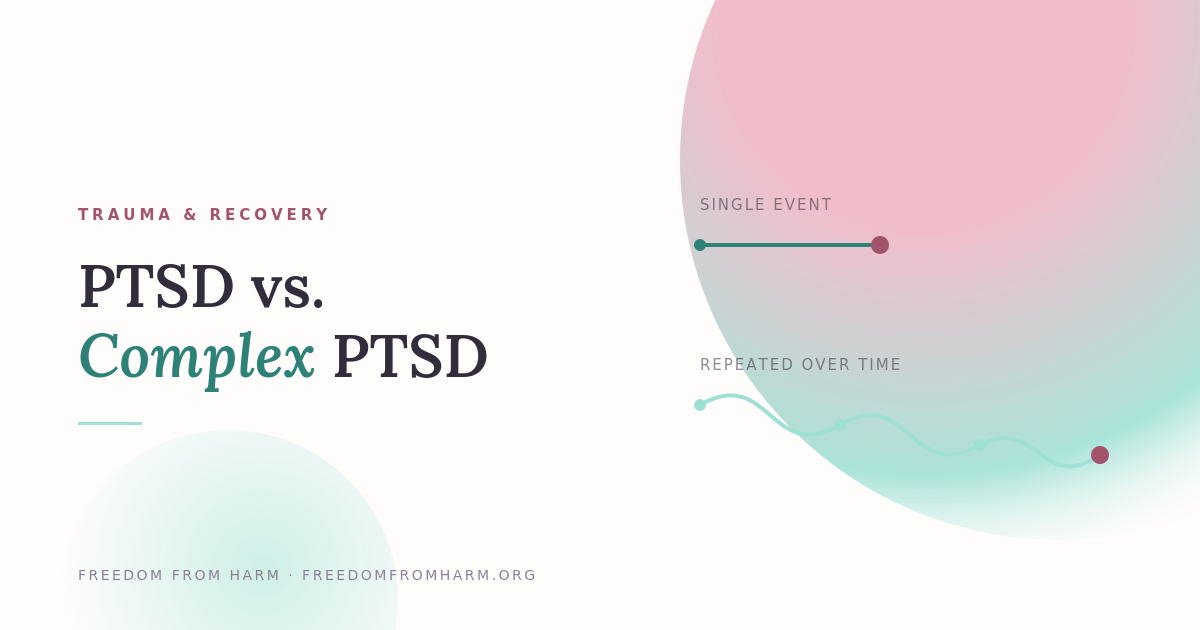
PTSD and Complex PTSD (C-PTSD) get used almost interchangeably, but they describe two different shapes of trauma. Neither is "worse" than the other — they're different injuries that call for somewhat different care.
Classic PTSD typically develops after a discrete traumatic event — an accident, an assault, a natural disaster. The nervous system gets stuck replaying a specific threat: flashbacks, nightmares, avoidance of reminders, a heightened startle response. The trauma has a beginning and an end, even if its effects don't.
C-PTSD develops from trauma that repeats over time, usually within a relationship you couldn't easily leave — ongoing childhood neglect or abuse, years inside a controlling relationship, sustained emotional or psychological abuse. Because the harm was chronic rather than a single incident, it shapes more than your response to specific triggers. It can affect your core sense of identity, your ability to regulate emotion, and your baseline expectations of relationships.
Alongside the intrusive memories and hypervigilance common to PTSD, C-PTSD often includes persistent shame or a sense of being fundamentally flawed, difficulty regulating emotions (swinging between numbness and overwhelm), and a pattern of unstable or difficult relationships — not because you're doing something wrong, but because your relational blueprint was built inside harm.
If therapy only targets a single traumatic memory when the real pattern is chronic and relational, it can miss the deeper work — rebuilding a sense of safety in relationships generally, not just processing one event. Naming which pattern fits your history helps a therapist build the right kind of treatment plan, rather than a generic one.
Originally published on Terri's Medium blog.
Take the two-minute self-check — private, and nothing is saved.
Take the Quiz